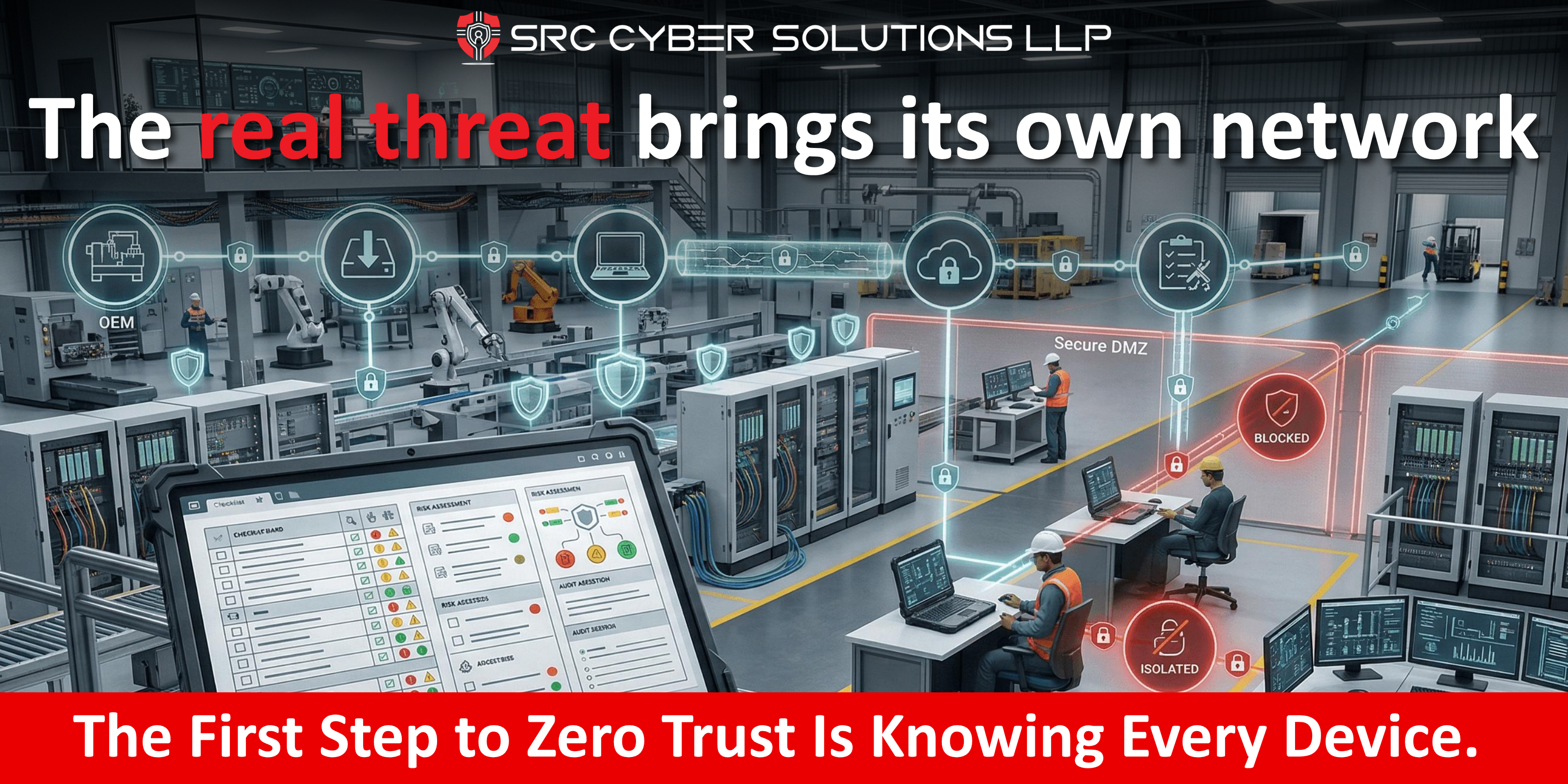
Organizations have invested heavily in securing emails, endpoints, firewalls, and cloud environments. Yet one critical security gap continues to exist—hardware trust.
Modern attackers don't always rely on your existing network. A rogue USB device, unauthorized wireless access point, hidden network bridge, or unmanaged IoT device can quietly introduce a new path into your environment. Because these devices operate at the physical layer, they often remain invisible to traditional security controls.
The challenge is that most Zero Trust strategies still rely on software-reported identities or inventory records to determine whether a device is trusted. But device identities can be spoofed, modified, or impersonated, allowing malicious hardware to blend in with legitimate assets and bypass traditional security tools.
Without verifying the physical identity of connected devices, organizations face critical blind spots. Unauthorized hardware, unmanaged assets, and dormant devices can evade Network Access Control (NAC), Endpoint Detection and Response (EDR), and other software-based security solutions, creating opportunities for attackers to establish persistence or move laterally across the network.
This is where Asset Visibility and Risk Management become essential. Modern organizations need more than an inventory of connected devices—they need continuous visibility into every asset and the ability to verify whether it truly belongs on the network.
By validating hardware at the physical layer, security teams can detect rogue devices, uncover hidden assets, reduce attack surfaces, and strengthen Zero Trust initiatives with confidence. Knowing what is connected is only the first step. Verifying what the device actually is what transforms visibility into trust.
As enterprise environments continue to expand across IT, OT, IoT, and remote infrastructure, hardware-level visibility is no longer optional—it's a foundational requirement for cyber resilience.
How SRC’s Asset Visibility & Risk Management Helps
SRC offers an Asset Visibility & Risk Management Platform that provides organizations with comprehensive visibility into hardware assets across IT, OT, IoT, and endpoint environments. It helps security teams identify known, unknown, unmanaged, and rogue devices at the physical layer, assess associated risks, and detect potential security gaps. With continuous asset monitoring, hardware-level identification, risk assessment, and automated response capabilities, organizations can strengthen Zero Trust, reduce their attack surface, and mitigate hardware-based threats before they become security incidents.